RF Welding

Radio Frequency (RF) Welding & RF Sealing Services

SealWerks specializes in custom RF welding services to create durable and airtight seals for shaped inflatable containment products. Our radio frequency welding services ensure a hermetic bond, essential for health and safety in containment devices. Whether you need to contain liquids, gases, or gels, our custom RF sealing services offer the ideal flexible solution.

Our team of expert engineers is ready to help you determine if RF welding is the perfect fit for your project. Contact us to discover how our custom RF welded products can meet your specific needs with precision and reliability.

Miniform

What is RF Welding?

RF welding, or high-frequency welding,  is a process for joining plastics by applying a high‑frequency electromagnetic field between electrodes to heat the material from within. The oscillating field makes dipolar molecules in compatible thermoplastics vibrate and generate heat; under clamp pressure, the molten layers fuse and then solidify into strong, uniform, often airtight or watertight seams. It works on polar plastics such as PVC and polyurethane (not on non‑polar polymers like polyethylene) and is widely used for items like medical bags, inflatables, and protective covers.

What is Dielectric Welding, Heat Sealing, or RF Sealing?

Dielectric Welding, also known as RF Sealing or heat sealing, is a high-frequency process that joins thermoplastics by placing them between shaped electrodes and applying a radio-frequency electromagnetic field to heat the material from within. Pressure then fuses the layers into uniform seams. The process is more commonly referred to as radio frequency (RF) welding. Unlike conventional hot‑bar heat sealing, the heat is generated inside polar plastics (commonly PVC and polyurethane) as their dipolar molecules oscillate in the field, producing strong, repeatable seals for flexible containment products and custom soft goods

Inflatable Products Welding
Make inflatable RF-welded products in a variety of shapes and sizes.
Negative pressure wound therapy unit
Bond materials to contain liquids, air, and solids.
HF tube welding
Add ancillary attachments to facilitate product functionality.

How does Radio Frequency Welding Work?

  1. Material Loading: Polar thermoplastic materials (such as PVC, PU, PET-G, or others)are placed between two electrodes or platens.
  2. Pressure Application: A clamping force is applied, typically via a press or actuator, bringing the materials into intimate contact and preparing them for welding.
  3. RF Energy Activation: High-frequency 27.12 MHz electromagnetic energy is applied across the electrodes, establishing an alternating electric field through the materials. 
  4. Dielectric Heating & Molecular Vibration: When the RF energy passes from the upper tooling and through the material, the molecules within the parent materials vibrate rapidly.
  5. Fusion and Bond Formation: As the plastic softens under heat, the layers merge at a molecular level. The melted areas mix and fuse into a single, homogeneous material.
  6. Holding Pressure During Cooling: The pressure is maintained even after turning off the RF energy to allow the molten joint to cool and solidify under containment. 

Combining high-frequency welding with our ISO Certified Manufacturing process, you get consistent results whether you need 100 pieces or 100,000.

Medical equipment like bellows and rebreather system bladders benefit from its clean process that does not employ any adhesives or solvents.

industries manufacturing

Benefits of RF Welding

Choose RF welding when you need:

  • Consistent quality
  • Clean manufacturing
  • Liquid, air, or solids containment
  • Customized shapes and attachments
  • Seams stronger than the base material
  • Shear tear/splitting resistance

RF Welded Products & Applications

Here are some examples of products constructed using Radio Frequency technology:

  • Inflatable bladders
  • Patient positioning cushions
  • Protective bellows and way covers
  • Flotation devices with inflation tubes
  • Fluid delivery and collection bags
  • Gel-filled therapy pads
  • Plating tank liners

Materials

Radio Frequency welding creates strong seams using no additional bonding agents. It can be used to fuse a range of flexible materials, including:

  • PVC
  • Polyurethane
  • TPU Coated Nylon / Polyester
  • TPU & TPE films
  • EVA
  • PET & PETG
  • Polyolefin

Industries

Industries that benefit from the Radio Frequency bonding process:

  • Medical
  • Health Care
  • Aviation and Aerospace
  • Safety and Recreation
  • Oil & Gas Industry
  • Pharmaceutical
  • Agricultural

Which materials work best for RF Welding & RF Sealing?

RF welding and RF sealing work best with polar thermoplastics. Their molecules have strong dipole moments and high dielectric loss factors that convert RF energy into heat at the seam. Top performers include PVC, polyurethane (PU), and thermoplastic polyurethane (TPU); their polarity (and, for PVC, common plasticizers) enables fast, uniform heating for clean, hermetic bonds. TPU‑coated nylon or polyester fabrics weld through the TPU layer to create reinforced airtight seams. Certain copolyesters like PETG and some PET grades, as well as EVA films with sufficient vinyl acetate content, also respond well to RF energy. Select TPE films with polar segments can be RF sealed effectively as well.

In contrast, low‑polarity materials such as polyolefins (e.g., polyethylene and polypropylene) absorb RF energy poorly and typically require RF‑reactive coatings, tie layers, or compatible laminates to seal—otherwise they are better suited to heat sealing methods. Beyond base resin, formulation and design choices impact results: plasticizer level in PVC, moisture content, pigments and fillers, fabric weave, and film thickness all influence weld speed and seam strength. For airtight inflatables, containment devices, and medical components, choosing the right grade and thickness of PVC, PU/TPU, PETG, or EVA—and validating frequency, power, pressure, and dwell ensures repeatable, high‑strength RF welded seams.

Choosing the right sealing process

The best sealing process for any application is determined by the materials, product size, and configuration. When you need to use materials or components that are not RF sensitive, heat sealing services or solvent bonding can be alternative options.

Thermal impulse welding or heat sealing bonds a wider range of plastic films and plastic-coated fabrics than RF and HF welding. The results and applications are very similar.
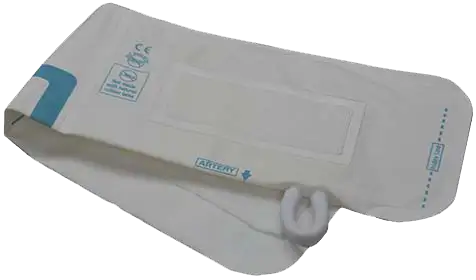
Solvent bonding is an effective fusion process for a substantial range of plastics and is widely used on fluids and air containment devices in the medical and health care industries.

Why Choose SealWerks for High Quality RF Welding Services

SealWerks combines engineering know‑how with dependable project management to deliver custom RF welding services and custom RF sealing services that meet your performance, budget, and timeline goals. From material selection and DFM to tooling, sampling, and production, our radio frequency welding services (also called dielectric welding services) are built around clean manufacturing, repeatable seams, and responsive support for applications like airtight inflatables, fluid containment, and protective soft goods.

  • Experience: Seasoned RF engineers and welders guide your design, material, and process choices to achieve reliable, hermetic seams.
  • Strong Communication: Clear timelines, proactive updates, and a single point of contact keep your project on track from quote to delivery.
  • High Quality Products: Robust process controls and application-appropriate testing help ensure consistent fit, finish, and seal integrity.
  • Fast Production: Streamlined tooling and agile scheduling enable quick prototypes and efficient scale-up for on-time production runs. 

Frequently Asked Questions

  1. What is radio frequency (RF) welding? Radio frequency (RF) welding is a specialized process used to join plastics by applying a high-frequency electromagnetic field. This process causes dipolar molecules in compatible thermoplastics, like PVC and polyurethane, to vibrate and generate heat. Under clamping pressure, the heat fuses the materials into durable and often airtight or watertight seams. It is widely used for products such as medical bags, inflatables, and protective covers.
  2. How does radio frequency (RF) welding work? RF welding works by placing thermoplastic materials between two electrodes. A high-frequency electromagnetic field stimulates the dipolar molecules within the material, creating heat that softens the plastics. Pressure from the electrodes ensures the layers fuse at the molecular level, forming strong and reliable seals. Once the RF energy is turned off, the pressure is maintained to let the seam cool and solidify.
  3. What materials can be RF-welded? RF welding works best with polar thermoplastics. Common materials include: PVC (Polyvinyl Chloride), Polyurethane, Thermoplastic Polyurethane (TPU) Coated Fabrics, PET and PETG, EVA
  4. What plastics can be RF-welded? Polar plastics, such as PVC and polyurethane, are specifically compatible with RF welding. Non-polar plastics, like polyethylene and polypropylene, cannot be RF-welded without special additives.
  5. What products are RF-welded? A wide range of products is created using RF welding, such as: Inflatable bladders, Medical collection and delivery bags, Patient positioning cushions, Gel therapy pads, Flotation devices, and more. 
  6. What is the thinnest material that can be RF-welded? The thinnest material we can work with is .002″ thick.
  7. What are RF-welded seams? RF-welded seams are airtight or watertight bonds created through the RF welding process. These seams are formed when thermoplastic materials, under high-frequency energy and pressure, fuse into a single, continuous layer. RF-welded seams provide strength and durability, often exceeding the strength of the base material.